To request a free sample copy of this report, please complete the form below.

Our Clients

  • Schineder Electric
  • KSIA - Korea Semiconductor Industry Association
  • Hitachi Astemo Limited
  • Samsung Electronics
  • Halvo holdings
  • NTT corporation
  • AGC Inc
  • Siemens AG
  • Unilever
  • Merck Pharmaceuticals
  • Atlas Copco
  • Hologic - Medical Technology company
  • Novartis
  • Henkel
  • Reckitt
  • Schineder Electric
  • KSIA - Korea Semiconductor Industry Association
  • Hitachi Astemo Limited
  • Samsung Electronics
  • Halvo holdings
  • NTT corporation
  • AGC Inc
  • Siemens AG
  • Unilever
  • Merck Pharmaceuticals
  • Atlas Copco
  • Hologic - Medical Technology company
  • Novartis
  • Henkel
  • Reckitt
  • FAQs

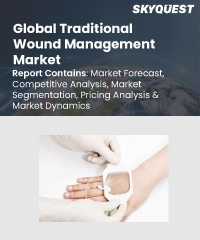
    Global Traditional Wound Management Market size was valued at USD 7.9 Billion in 2024 and is poised to grow from USD 8.32 Billion in 2025 to USD 12.57 Billion by 2033, growing at a CAGR of 5.3% during the forecast period (2026–2033). 

    The competitive landscape of the global traditional wound management market is marked by the presence of a diverse array of companies vying to address the complex demands of wound care. Established medical device manufacturers, pharmaceutical giants, and specialized wound care companies are key contenders in this dynamic arena. These players compete to provide a comprehensive range of wound management products, including dressings, bandages, antiseptics, and other essential solutions. '3M (US) ', 'Smith & Nephew (UK) ', 'ConvaTec (UK) ', 'B. Braun Melsungen (Germany) ', 'Cardinal Health (US) ', 'Medtronic (Ireland) ', 'Hollister Incorporated (US) ', 'Paul Hartmann AG (Germany) ', 'Johnson & Johnson (US) ', 'Integra LifeSciences (US) ', 'DermaRite Industries (US) ', 'DeRoyal Industries (US) ', 'Lohmann & Rauscher (Germany) ', 'Hartmann Group (Germany) ', 'Medline Industries (US) ', 'Coloplast (Denmark) ', 'BD (US) ', 'Baxter International (US) '

    The increasing prevalence of chronic diseases such as diabetes, cardiovascular diseases, and obesity is a primary driver of the traditional wound management market. Chronic conditions often lead to slow-healing wounds, creating a sustained demand for wound care products.

    Shift towards Advanced Wound Care: While the traditional wound management market remains significant, there's a growing trend toward advanced wound care products and techniques. Innovations such as bioactive dressings, growth factors, and negative pressure wound therapy are gaining traction for their enhanced healing properties.

    In the year 2022, North America emerged as the dominant force in the global industry, commanding a substantial revenue share exceeding 45.00%. This ascendancy is largely attributed to a convergence of factors that underscore the region's integral role in the wound care landscape. A notable surge in cases related to sports injuries, road accidents, and the escalating prevalence of chronic diseases distinctly propel the demand for wound care solutions within the North American expanse. The demographic dynamic plays a significant role, as the geriatric population, vulnerable to wound-related concerns, contributes notably to the product demand. A tangible manifestation of this lies in statistics provided by the Administration for Community Living, which revealed that the percentage of individuals aged 65 and above reached 54.1 million in 2019, constituting a significant 16% of the overall population. Additionally, the region's robust healthcare infrastructure, coupled with a wealth of skilled professionals, augments its capacity to cater to diverse wound care requirements, further propelling the demand for products.

    Feedback From Our Clients

    Global Traditional Wound Management Market

    Report ID: SQMIG45E2158

    $5,300
    BUY NOW


