To request a free sample copy of this report, please complete the form below.

Our Clients

  • Schineder Electric
  • KSIA - Korea Semiconductor Industry Association
  • Hitachi Astemo Limited
  • Samsung Electronics
  • Halvo holdings
  • NTT corporation
  • AGC Inc
  • Siemens AG
  • Unilever
  • Merck Pharmaceuticals
  • Atlas Copco
  • Hologic - Medical Technology company
  • Novartis
  • Henkel
  • Reckitt
  • Schineder Electric
  • KSIA - Korea Semiconductor Industry Association
  • Hitachi Astemo Limited
  • Samsung Electronics
  • Halvo holdings
  • NTT corporation
  • AGC Inc
  • Siemens AG
  • Unilever
  • Merck Pharmaceuticals
  • Atlas Copco
  • Hologic - Medical Technology company
  • Novartis
  • Henkel
  • Reckitt
  • FAQs

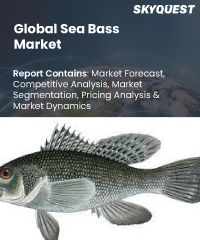
    Global Sea Bass Market size was valued at USD 10.45 Billion in 2024 and is poised to grow from USD 10.91 Billion in 2025 to USD 15.4 Billion by 2033, growing at a CAGR of 4.4% during the forecast period (2026–2033). 

    The Sea Bass Market features a competitive landscape characterized by a mix of key players, regional suppliers, and evolving market dynamics. Prominent companies like Cooke Aquaculture, Nireus S.A., and Selonda Aquaculture S.A. are significant players, renowned for their extensive aquaculture operations and commitment to sustainable practices. These industry leaders often set the standards for responsible and environmentally conscious sea bass farming. Regional players also play a vital role, particularly in Mediterranean countries like Greece and Turkey, which are major sea bass producers. They contribute to the market's diversity and provide options for consumers seeking local and niche products. Furthermore, the market has seen increased focus on sustainability and traceability, driven by consumer demand and regulatory pressures. Certification bodies like the Aquaculture Stewardship Council (ASC) play a crucial role in establishing and verifying sustainable practices within the industry. This emphasis on responsible sourcing has created a competitive edge for companies with recognized sustainability credentials. 'Marine Harvest ASA (Norway) ', 'Leroy Seafood Group (Norway) ', 'Mowi ASA (Norway) ', 'Thai Union Group (Thailand) ', 'Nippon Suisan Kaisha, Ltd. (Japan) ', 'Selonda Aquaculture S.A. (Greece) ', 'Cooke Aquaculture Inc. (Canada) ', 'Pescanova (Spain) ', 'Kyokuyo Co., Ltd. (Japan) ', 'Grupo Nueva Pescanova (Spain) ', 'Royal Greenland A/S (Denmark) ', 'Dongwon Industries Co., Ltd. (South Korea) ', 'Clearwater Seafoods Inc. (Canada) ', 'Trident Seafoods Corporation (USA) ', 'Grupo Insuina (Spain) ', 'Australis Aquaculture (USA) ', 'Thai Union Frozen Products PCL (Thailand) ', 'Hellenic Aquaculture (Greece) ', 'Mazzetta Company, LLC (USA) ', 'Open Blue (Panama)'

    Growing awareness among consumers about the health benefits of consuming sea bass has been a significant driver for the market. Sea bass is known for being a lean source of protein and is rich in essential nutrients like omega-3 fatty acids, which are beneficial for heart health. As consumers become more health-conscious, they are increasingly seeking out seafood options like sea bass, driving demand for this fish.

    Increasing Demand for Sustainable Seafood: There has been a growing awareness and concern about sustainable seafood practices among consumers. This trend has influenced the sea bass market, with consumers and retailers seeking sea bass that is sourced through sustainable fishing or aquaculture practices. Sustainable sea bass production methods, such as responsible aquaculture and certifications from organizations like the Aquaculture Stewardship Council (ASC), have become more important for both market players and consumers. This trend is likely to continue as environmental and ethical considerations play a significant role in seafood purchasing decisions.

    The Sea Bass Market is analyzed based on its regional presence, which includes North America, Europe, Asia Pacific, Middle East and Africa, and Latin America. Europe is the dominant region in the sea bass market. Countries like Greece, Spain, and Turkey have a rich tradition of sea bass aquaculture. The Mediterranean region, in particular, is renowned for its high-quality sea bass production. European consumers have a strong appetite for seafood, and sea bass is a popular choice due to its mild flavor and versatility in various cuisines. Stringent quality standards and regulations in the European Union ensure that European sea bass products maintain high quality and safety, further enhancing their reputation. The well-established supply chains, along with a mature market, contribute to Europe's dominance in the sea bass market. 

    Feedback From Our Clients

    Global Sea Bass Market

    Report ID: SQMIG30C2146

    $5,300
    BUY NOW


