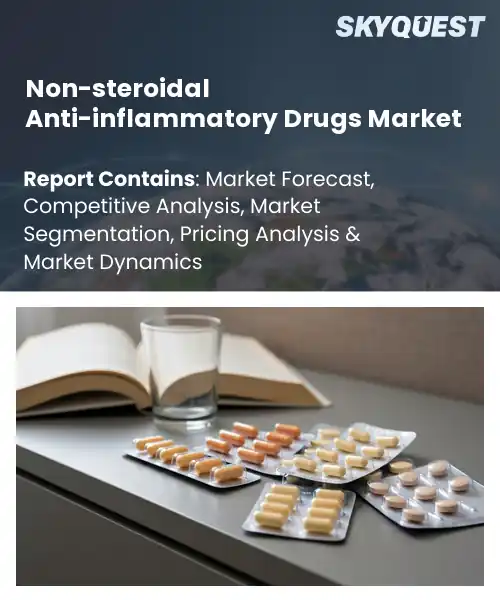
Non-steroidal Anti-inflammatory Drugs Market
Report ID: SQMIG35I2653
Report ID: SQMIG35I2653
[email protected]
USA +1 351-333-4748
Report ID:
SQMIG35I2653 |
Region:
Global |
Published Date: May, 2026
Pages:
157
|Tables:
184
|Figures:
79


Global Non-Steroidal Anti-Inflammatory Drugs Market size was valued at USD 24.8 Billion in 2024 and is poised to grow from USD 26.21 Billion in 2025 to USD 40.84 Billion by 2033, growing at a CAGR of 5.7% during the forecast period (2026-2033).
The primary driver of the non-steroidal anti-inflammatory drugs industry is the sustained global demand for effective pain and inflammation management, propelled by an aging population and rising chronic conditions such as osteoarthritis and rheumatoid arthritis. This market encompasses both over-the-counter analgesics like ibuprofen and naproxen and prescription agents including COX-2 inhibitors and newer formulations, and it matters because analgesic access affects quality of life and healthcare utilization.
A pivotal factor accelerating non-steroidal anti-inflammatory drugs market growth is widespread genericization combined with formulation innovation because patent expirations caused price erosion that increased affordability and volume, which in turn incentivized manufacturers to develop differentiated topical gels, extended-release tablets and fixed-dose combinations to protect margins. For example, cheaper generic ibuprofen expanded OTC use for acute musculoskeletal injuries, while extended-release naproxen improved adherence in chronic osteoarthritis, and topical diclofenac reduced systemic adverse events, enabling clinicians to treat elderly patients more safely. Consequently manufacturers now pursue emerging market penetration and chronic care partnerships as scalable opportunities and growth.
How is AI optimizing development in the non-steroidal anti-inflammatory drugs market?
The introduction and utilization of AI technologies, tools, and methodologies are transforming the NSAID development process. AI has accelerated the process of identifying appropriate drug targets for NSAIDs; developed new small-molecule designs; improved the safety profiles of NSAIDs and optimized the clinical trial planning process. The key areas of impact from AI include the use of machine learning for the prioritization of targets and ligands; the use of generative chemistry to create novel scaffolds, the use of in-silico toxicity screening to determine the potential toxicity of new compounds and the use of AI for the enrichment of clinical trials.
These trends are evident in the industry by the number of pharmaceutical companies implementing AI platforms and the number of collaborative partnerships intended to generate data-driven decisions earlier in the drug discovery process. Other examples of these AI-driven changes are collaborations between several pharmaceutical companies to combine their multimodal clinical data and the availability of companies that have specialized small molecule engines that automate the design and optimization processes for small molecule compounds.
Genedata in May 2025 has launched an AI-native CMC platform that dramatically accelerates chemistry manufacturing and control of small molecule drugs (i.e., NSAIDs), provides predictive process monitoring, and reduces time to scale the production of small molecules.
Market snapshot - (2026-2033)
Global Market Size
USD 24.8 Billion
Largest Segment
Ibuprofen
Fastest Growth
Celecoxib
Growth Rate
5.7% CAGR
To get more insights on this market click here to Request a Free Sample Report
Global non-steroidal anti-inflammatory drugs market is segmented by drug type, route of administration, application, distribution channel, end user, dosage form and region. Based on drug type, the market is segmented into Ibuprofen, Naproxen, Aspirin, Diclofenac, Celecoxib, Ketorolac and Others. Based on route of administration, the market is segmented into Oral, Topical, Injectable and Others. Based on application, the market is segmented into Pain Management, Arthritis Treatment, Fever Management, Postoperative Pain, Musculoskeletal Disorders and Others. Based on distribution channel, the market is segmented into Hospital Pharmacies, Retail Pharmacies, Online Pharmacies and Others. Based on end user, the market is segmented into Hospitals, Clinics, Home Care Settings, Sports Medicine Centers and Others. Based on dosage form, the market is segmented into Tablets & Capsules, Creams & Gels, Injections, Suspensions and Others. Based on region, the market is segmented into North America, Europe, Asia Pacific, Latin America and Middle East & Africa.
Ibuprofen segment dominates with large non-steroidal anti-inflammatory drugs market share because its broad safety and efficacy profile coupled with extensive availability across over the counter and prescription channels makes it a default choice for clinicians and consumers in the non steroidal anti inflammatory drugs market. Strong physician familiarity, diverse dosage forms and cost effectiveness drive habitual use which sustains demand across acute pain fever and chronic musculoskeletal indications, reinforcing market leadership through continuous generic supply.
As per non-steroidal anti-inflammatory drugs market regional outlook, naproxen segment is emerging as the most rapidly expanding area due to its longer duration and growing use in chronic pain and inflammatory conditions. Novel sustained release formulations and fixed dose therapies targeting long term arthritis care are driving adoption, enabling new product entries and therapeutic extension that fuel near term market opportunity.
As per non-steroidal anti-inflammatory drugs market regional analysis, topical segment stands out because localized delivery minimizes systemic exposure while directly targeting musculoskeletal and dermatologic pain sites, improving tolerability and patient acceptance within the non steroidal anti inflammatory drugs market. Formulation advances in gels creams and transdermal patches increase penetration and convenience, prompting prescribers and consumers to prefer topical options for chronic localized conditions, which in turn expands shelf space and encourages investment in new topical innovations.
As per non-steroidal anti-inflammatory drugs market regional forecast, injectable segment is witnessing the strongest growth momentum as hospitals and procedural settings prioritize injectable options for acute and postoperative pain control. Improvements in ready to use formulations and compatibility with multimodal analgesia protocols increase clinician uptake, driving institutional procurement and stimulating development of specialty injectable products that extend therapeutic reach.
To get detailed segments analysis, Request a Free Sample Report
A convergence of advanced healthcare infrastructures, concentrated pharmaceutical expertise and established commercial ecosystems give North America an overall profile that dominates the global non-steroidal anti-inflammatory drugs market. The region possesses extensive clinical research capabilities and established manufacturing networks to facilitate both innovation and large volume production. Regulatory systems are clear; intellectual property rights legislation is strong; there are strong incentives for investment in new formulations and lifecycle management; and there are comprehensive distribution/marketing channels with sophisticated payer systems, which allow for rapid market access for differentiated therapies. In addition, high patient awareness, the existence of integrated clinical practice environments (about 100cc) and an active collaboration between the pharmaceutical industry and academic medical centres all assist with driving the adoption of new drugs within North America. These numerous factors provide multinational companies (MNCs) and local firms with the ability to coordinate their successful development, evidence-generation and commercialisation efforts from the North American regional hubs, thereby ensuring continued leadership.
Non-steroidal anti-inflammatory drugs market in the United States is shaped by a concentration of multinational manufacturers, extensive clinical research capabilities, and a sophisticated commercial infrastructure. Market dynamics are influenced by comprehensive payer systems, broad over the counter channel penetration, and rapid adoption of new delivery formats. Regulatory clarity and strong intellectual property frameworks support product development, while collaboration between academia and industry accelerates innovation and lifecycle management across therapeutic segments.
Non-steroidal anti-inflammatory drugs market in Canada is defined by stringent safety oversight and coordinated public reimbursement frameworks. Provincial formularies and policy mechanisms govern access while domestic and global manufacturers address pricing and evidence requirements. Regulatory stakeholders prioritize evidence based guidance and post market surveillance. Market development is supported by selective uptake of novel formulations, collaboration with academic research centers, and initiatives aimed at enhancing access across urban and rural communities.
As per non-steroidal anti-inflammatory drugs industry analysis, Europe is being driven by regulatory harmonization, strong research networks, and varying forms of healthcare financing which all add up to a strong market for continued expansion. Established industrial capacity has been developed within Europe along with centres of clinical excellence, providing for large amounts of evidence to support the differentiation of products. Payers & HTAs are focused on finding value-based positioning in their decision making and expect manufacturers to show evidence of both clinically and economically positive construct outcomes. An established over the counter business supports the wholesale aspects of selling prescriptions and increases the accessibility of treatment by patients. Established pathways for shipping products across borders and having regulated processes developed for multiple jurisdictions will enable manufacturers to get product into multiple markets more efficiently than other parts of the world. The industry has continued consolidation and continues to invest in formulation sciences and manufacturing in their respective countries which builds resilience in supply chains and allows for greater ability to meet local market needs by tailoring commercialized strategies to each national marketplace.
Germany is characterized by a strong domestic pharmaceutical industry, advanced clinical research infrastructure and rigorous regulatory oversight. Market participants focus on high quality manufacturing, evidence generation, and value demonstration to satisfy payer requirements. Integrated hospital care channels support diversified product launches. Close collaboration among industry, academia, and health agencies facilitates innovation in formulations and delivery mechanisms, reinforcing Germany as a hub for development and commercialization.
Non-steroidal anti-inflammatory drugs market in the United Kingdom is experiencing dynamic expansion driven by an adaptive regulatory environment and active research networks. Market activity benefits from strong collaboration between industry and healthcare providers, early adoption of novel delivery formats, incorporating real world evidence into value assessments. Evolving commercial strategies, engagement with payer institutions, a vibrant ecosystem of technology providers support differentiated product positioning and translation of innovation to clinical practice.
France is emerging through a combination of robust regulatory oversight and public health initiatives. Market participants navigate centralized evaluation processes and procurement approaches, while domestic manufacturers maintain a significant role in generics and differentiated formulations. Hospital networks and specialists influence early adoption of new therapies. Increasing collaboration among industry, payers, and research institutions supports targeted innovation and expansion of therapeutic options to meet clinical needs.
In the Asia Pacific region, growth is evident in the area of non-steroidal anti-inflammatories (NSAIDs) due to increased capabilities in manufacturing; targeted investment in research; and progressive regulation that aligns with international business norms. The development of clinical trial infrastructure and synergies between local companies and global businesses facilitate technology transfer and commercialization more rapidly. The changing nature of healthcare delivery systems, together with an emphasis on cost effective ways to treat patients, will support both established therapies and new types of therapies being used. The rise of digital integration into healthcare and continuous optimization of supply chain processes will further improve access for patients as well as provide for greater resilience in the business community. Advanced economies such as Japan and South Korea also have a strong presence in the region with their capabilities in both specialized research and high quality production which will ultimately increase the competitiveness of the region and enable growth through exports.
Non-steroidal anti-inflammatory drugs market in Japan is driven by advanced research capabilities, strict quality standards, and a culture of pharmaceutical innovation. Local manufacturers emphasize manufacturing processes and targeted formulation development to meet demanding regulatory expectations. Close collaboration between industry, academic institutions, and clinical centers supports rigorous evidence generation. Commercial channels prioritize safety and efficacy communication, while export oriented strategies and international partnerships help translate domestic innovation into broader regional presence.
Non-steroidal anti-inflammatory drugs market in South Korea combines a dynamic biotech ecosystem with advanced manufacturing and regulatory pathways. Local firms emphasize formulation innovation and efficient production supporting domestic supply and export ambitions. Collaboration with international partners accelerates technology transfer and commercialization. Health system modernization and digital health uptake facilitate real world evidence collection and informed prescribing. These elements strengthen South Korea position within regional pharmaceutical value chains and global networks.
To know more about the market opportunities by region and country, click here to
Buy The Complete Report
Increasing Demand For Pain Relief
Advancements In Drug Formulations
Safety Concerns and Side Effects
Stringent Regulatory Approval Processes
Request Free Customization of this report to help us to meet your business objectives.
The competitive landscape in the market is one of consolidation, platform-driven entrants, and asset-based partnerships. Large pharmaceutical companies pursue acquisitions-Eli Lilly's acquisition of SiteOne, for instance-in pursuit of novel pain assets. Al-driven discovery firms like Enveda raised huge amounts of money to move ahead with topical and systemic anti-inflammatory candidates. Joint ventures like that of Grünenthal with Kyowa Kirin demonstrate strategic portfolio alignment.
SkyQuest’s ABIRAW (Advanced Business Intelligence, Research & Analysis Wing) is our Business Information Services team that Collects, Collates, Correlates, and Analyses the Data collected by means of Primary Exploratory Research backed by robust Secondary Desk research.
As per SkyQuest analysis, the market growth is chiefly driven by sustained demand for effective pain and inflammation management from an aging population, with widespread genericization and formulation innovation further accelerating uptake. The ibuprofen segment continues to dominate due to broad safety, efficacy and OTC availability while North America leads the market supported by advanced healthcare infrastructure and strong commercial ecosystems. However, persistent safety concerns around gastrointestinal, cardiovascular and renal adverse events constrain expansion and require risk mitigation. Manufacturers are focusing on topical and extended-release formats and digital care integration to balance access, adherence and differentiated growth opportunities across markets.
| Report Metric | Details |
|---|---|
| Market size value in 2024 | USD 24.8 Billion |
| Market size value in 2033 | USD 40.84 Billion |
| Growth Rate | 5.7% |
| Base year | 2024 |
| Forecast period | (2026-2033) |
| Forecast Unit (Value) | USD Billion |
| Segments covered |
|
| Regions covered | North America (US, Canada), Europe (Germany, France, United Kingdom, Italy, Spain, Rest of Europe), Asia Pacific (China, India, Japan, Rest of Asia-Pacific), Latin America (Brazil, Rest of Latin America), Middle East & Africa (South Africa, GCC Countries, Rest of MEA) |
| Companies covered |
|
| Customization scope | Free report customization with purchase. Customization includes:-
|
To get a free trial access to our platform which is a one stop solution for all your data requirements for quicker decision making. This platform allows you to compare markets, competitors who are prominent in the market, and mega trends that are influencing the dynamics in the market. Also, get access to detailed SkyQuest exclusive matrix.
Table Of Content
Executive Summary
Market overview
Parent Market Analysis
Market overview
Market size
KEY MARKET INSIGHTS
COVID IMPACT
MARKET DYNAMICS & OUTLOOK
Market Size by Region
KEY COMPANY PROFILES
Methodology
For the Non-steroidal Anti-inflammatory Drugs Market, our research methodology involved a mixture of primary and secondary data sources. Key steps involved in the research process are listed below:
1. Information Procurement: This stage involved the procurement of Market data or related information via primary and secondary sources. The various secondary sources used included various company websites, annual reports, trade databases, and paid databases such as Hoover's, Bloomberg Business, Factiva, and Avention. Our team did 45 primary interactions Globally which included several stakeholders such as manufacturers, customers, key opinion leaders, etc. Overall, information procurement was one of the most extensive stages in our research process.
2. Information Analysis: This step involved triangulation of data through bottom-up and top-down approaches to estimate and validate the total size and future estimate of the Non-steroidal Anti-inflammatory Drugs Market.
3. Report Formulation: The final step entailed the placement of data points in appropriate Market spaces in an attempt to deduce viable conclusions.
4. Validation & Publishing: Validation is the most important step in the process. Validation & re-validation via an intricately designed process helped us finalize data points to be used for final calculations. The final Market estimates and forecasts were then aligned and sent to our panel of industry experts for validation of data. Once the validation was done the report was sent to our Quality Assurance team to ensure adherence to style guides, consistency & design.
Analyst Support
Customization Options
With the given market data, our dedicated team of analysts can offer you the following customization options are available for the Non-steroidal Anti-inflammatory Drugs Market:
Product Analysis: Product matrix, which offers a detailed comparison of the product portfolio of companies.
Regional Analysis: Further analysis of the Non-steroidal Anti-inflammatory Drugs Market for additional countries.
Competitive Analysis: Detailed analysis and profiling of additional Market players & comparative analysis of competitive products.
Go to Market Strategy: Find the high-growth channels to invest your marketing efforts and increase your customer base.
Innovation Mapping: Identify racial solutions and innovation, connected to deep ecosystems of innovators, start-ups, academics, and strategic partners.
Category Intelligence: Customized intelligence that is relevant to their supply Markets will enable them to make smarter sourcing decisions and improve their category management.
Public Company Transcript Analysis: To improve the investment performance by generating new alpha and making better-informed decisions.
Social Media Listening: To analyze the conversations and trends happening not just around your brand, but around your industry as a whole, and use those insights to make better Marketing decisions.
REQUEST FOR SAMPLE
 REQUEST FREE CUSTOMIZATION
Global Non-Steroidal Anti-Inflammatory Drugs Market size was valued at USD 24.8 Billion in 2024 and is poised to grow from USD 26.21 Billion in 2025 to USD 40.84 Billion by 2033, growing at a CAGR of 5.7% during the forecast period (2026-2033).
Competitive landscape in the global NSAID market is defined by consolidation, platform driven entrants, and asset level partnerships. Large pharmas pursue acquisitions such as Eli Lilly's purchase of SiteOne to gain novel pain assets. AI driven discovery firms like Enveda secured large funding to accelerate topical and systemic anti inflammatory candidates. Joint ventures such as Grünenthal with Kyowa Kirin show strategic portfolio alignment. 'Pfizer Inc.', 'GlaxoSmithKline plc', 'Bayer AG', 'Sanofi S.A.', 'Johnson & Johnson', 'AbbVie Inc.', 'Novartis AG', 'Boehringer Ingelheim International GmbH', 'Sun Pharmaceutical Industries Limited', 'Dr. Reddy’s Laboratories Ltd.', 'Teva Pharmaceutical Industries Ltd.', 'Viatris Inc.', 'Aurobindo Pharma Limited', 'Cipla Limited', 'Hikma Pharmaceuticals PLC', 'Alkem Laboratories Ltd.', 'Zydus Lifesciences Limited', 'Lupin Limited', 'Torrent Pharmaceuticals Ltd.', 'Endo International plc'
Non-steroidal anti-inflammatory drugs remain a primary option for symptomatic pain relief across a wide range of acute and chronic conditions, which encourages broader prescribing and patient acceptance. As healthcare providers prioritize therapies that offer rapid symptom control with established safety profiles, demand for NSAIDs expands in ambulatory and hospital settings. Pharmaceutical manufacturers respond by maintaining robust production and supply chains and promoting therapeutic familiarity among clinicians, which collectively sustains market momentum through consistent utilization and reinforcement of NSAIDs as foundational components of pain management strategies.
𝐈𝐧𝐭𝐞𝐠𝐫𝐚𝐭𝐞𝐝 𝐃𝐢𝐠𝐢𝐭𝐚𝐥 𝐂𝐚𝐫𝐞 𝐌𝐨𝐝𝐞𝐥𝐬: Integration of digital care platforms with clinical workflows is accelerating broader adoption of NSAIDs within coordinated treatment pathways. Telemedicine consultations, digital symptom tracking, and adherence support tools enable clinicians to tailor therapy and monitor patient response closely, improving treatment continuity. Payers and providers are exploring value-based approaches that emphasize outcomes and patient experience, encouraging formulations and packaging that support remote management. Collaboration between pharma, health IT and providers is creating ecosystem opportunities to differentiate products through connected patient care solutions.
Why does North America Dominate the Global Non-steroidal Anti-inflammatory Drugs Market? |@12


Want to customize this report? This report can be personalized according to your needs. Our analysts and industry experts will work directly with you to understand your requirements and provide you with customized data in a short amount of time. We offer $1000 worth of FREE customization at the time of purchase.
Feedback From Our Clients


 USA (+1) 351-333-4748

