Our Clients

  • Schineder Electric
  • KSIA - Korea Semiconductor Industry Association
  • Hitachi Astemo Limited
  • Samsung Electronics
  • Halvo holdings
  • NTT corporation
  • AGC Inc
  • Siemens AG
  • Unilever
  • Merck Pharmaceuticals
  • Atlas Copco
  • Hologic - Medical Technology company
  • Novartis
  • Henkel
  • Reckitt
  • Schineder Electric
  • KSIA - Korea Semiconductor Industry Association
  • Hitachi Astemo Limited
  • Samsung Electronics
  • Halvo holdings
  • NTT corporation
  • AGC Inc
  • Siemens AG
  • Unilever
  • Merck Pharmaceuticals
  • Atlas Copco
  • Hologic - Medical Technology company
  • Novartis
  • Henkel
  • Reckitt
  • FAQs

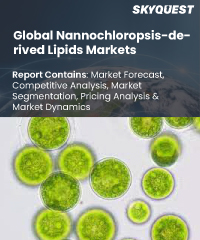
    Global Nannochloropsis-derived Lipids Market size was valued at USD 2.8 Million in 2024 and is poised to grow from USD 3.04 Million in 2025 to USD 5.83 Million by 2033, growing at a CAGR of 8.5% during the forecast period (2026–2033).

    The industry's major significant players control a large portion of the market for nannochloropsis-derived lipids due to their extensive worldwide reach and reliable distributed systems. These businesses concentrate on various business strategies, such as establishing long-term supply agreements with several distribution channels, to combat the competition. Due to the availability of a target customer base in the area, major firms have recently focussed more on entering Southeast Asian markets. 'BASF SE (Germany) ', 'Corbion (Netherlands) ', 'International Flavors & Fragrances Inc. (United States) ', 'Cyanotech Corporation (United States) ', 'Earthrise Nutritionals LLC (United States) ', 'Cargill, Incorporated (United States) ', 'Algea (Norway) ', 'Reed Mariculture (United States) ', 'Cellana (United States) ', 'Algatech (Israel) ', 'Varicon Aqua Solutions (United Kingdom) ', 'Nutrex Hawaii (United States) ', 'Guangdong Runke Bioengineering (China) ', 'Qingdao Jingling Ocean Technology (China) ', 'Phyco Biotech (United States) ', 'Lyxia Corporation (United States) ', 'iwi Life (United States)'

    Growing Awareness of the Health Benefits of Omega-3 Pufa Over the past several years, there has been a sharp rise in the number of people looking for high-omega products. In the U.S., for instance, 9% of supermarket shoppers make a regular purchase of high-omega-3 foods or beverages, and the proportion of individuals who take fish oil supplements increased from 8% in 2016 to 17% in 2021.Additionally, customers increasingly think of health and beauty items as dietary supplements.

    International professionals at the front edge of lipid research and technology are working together to advance nutritional lipid innovations. However, due to research gaps and a lack of a uniform global regulatory framework, using lipids in nutraceuticals is faced with difficulties.

    According to estimates, Europe will dominate the worldwide market for lipids (fatty acids) generated from Nannochloropsis in 2021, followed by North America and Asia-Pacific. This is due to the high demand for health and wellness goods and the rising incidence of heart disease. Additionally, the region's market for lipid extraction benefits from the simple accessibility of raw materials because of the existence of important Nannochloropsis biomass providers. Additionally, it is anticipated that the region's stakeholders in the market for Nannochloropsis derived lipids (fatty acids) will benefit greatly from the expanding nutraceuticals and dietary supplement industries as well as the growing popularity of omega 3 fortified/functional food and beverages among the aging population.

    Feedback From Our Clients

    Global Nannochloropsis-derived Lipids Market

    Report ID: SQMIG30C2105

    $5,300
    BUY NOW


