Our Clients

  • Schineder Electric
  • KSIA - Korea Semiconductor Industry Association
  • Hitachi Astemo Limited
  • Samsung Electronics
  • Halvo holdings
  • NTT corporation
  • AGC Inc
  • Siemens AG
  • Unilever
  • Merck Pharmaceuticals
  • Atlas Copco
  • Hologic - Medical Technology company
  • Novartis
  • Henkel
  • Reckitt
  • Schineder Electric
  • KSIA - Korea Semiconductor Industry Association
  • Hitachi Astemo Limited
  • Samsung Electronics
  • Halvo holdings
  • NTT corporation
  • AGC Inc
  • Siemens AG
  • Unilever
  • Merck Pharmaceuticals
  • Atlas Copco
  • Hologic - Medical Technology company
  • Novartis
  • Henkel
  • Reckitt
  • FAQs

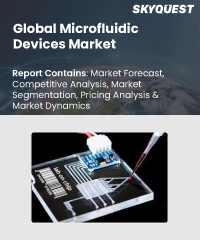
    Global Microfluidic Devices Market size was valued at USD 27.61 Billion in 2024 and is poised to grow from USD 31.14 Billion in 2025 to USD 81.63 Billion by 2033, growing at a CAGR of 12.8% during the forecast period (2026–2033).

    The competitive landscape is shaped by factors such as product innovation, quality, pricing, regulatory compliance, and customer relationships. Established companies with a strong market presence leverage their experience, brand reputation, and extensive distribution networks to maintain a competitive edge. These players often invest significantly in research and development to introduce new and advanced microfluidic devices that meet the evolving needs of customers. 'Bio-Rad Laboratories (USA) ', 'Illumina (USA) ', 'PerkinElmer (USA) ', 'Abbott Laboratories (USA) ', 'Thermo Fisher Scientific (USA) ', 'bioMerieux (France) ', 'Danaher Corporation (USA) ', 'Agilent Technologies (USA) ', 'Sphere Fluidics (UK) ', 'Standard BioTools (formerly Fluidigm Corporation) (USA) ', 'BD (Becton, Dickinson and Company) (USA) ', 'IDEX Corporation (USA) ', 'SMC Corporation (Japan) ', 'Parker Hannifin Corporation (USA) ', 'Fortive Corporation (USA) ', 'Aignep S.p.A (Italy) ', 'Lonza Group (Switzerland) ', 'Emulate (USA) ', 'Dolomite Bio (UK)'

    There is an increasing market demand for compact and portable devices across various industries, including healthcare, pharmaceuticals, and biotechnology. Microfluidic devices are well-suited to meet this demand due to their small size, reduced sample volumes, and integration of multiple functions. The ability to perform complex laboratory processes on a small scale, along with the convenience of portability and on-site analysis capabilities, are driving the adoption of microfluidic devices in different applications and contributing to market growth.

    Increasing adoption of point-of-care testing (POCT) applications: Point-of-care testing refers to diagnostic testing conducted at or near the patient, providing immediate results that facilitate quick decision-making by healthcare professionals. Microfluidic devices have gained significant traction in POCT applications due to their ability to handle small sample volumes, enable rapid analysis, and offer portability and ease of use. These devices are utilized in various healthcare settings, including hospitals, clinics, and home care settings, allowing for faster diagnosis and treatment decisions. The trend towards POCT is driven by the need for rapid and accurate diagnostic information, particularly in emergency and critical care situations.

    North America holds a significant share in the Tablet Coatings market due to several factors. The region has a well-established pharmaceutical and healthcare infrastructure, along with a strong presence of key pharmaceutical manufacturers. The demand for tablet coatings in North America is driven by factors such as increasing research and development activities, high healthcare expenditure, and the presence of advanced pharmaceutical manufacturing technologies. Additionally, the region has a higher adoption rate of innovative coating technologies and a focus on quality control and regulatory compliance, further contributing to its dominance in the market.

    Feedback From Our Clients

    Global Microfluidic Devices Market

    Report ID: SQMIG35H2120

    $5,300
    BUY NOW


